LBD shooting of Jean-François Martin: the police officer identified through 3D modelling
Published on
In 2016, Jean-François Martin lost an eye to an LBD shot during a protest against the Labour Law (Loi Travail) in Rennes. Initially closed with a dismissal of the case (non-lieu), the case was reopened in 2021: an expert report by Index made it possible to identify the police officer who fired the shot, and he was sent for trial before the criminal court. Since then, the courts have reversed course, pronouncing a new dismissal. Today, we are making the contents of our report public.

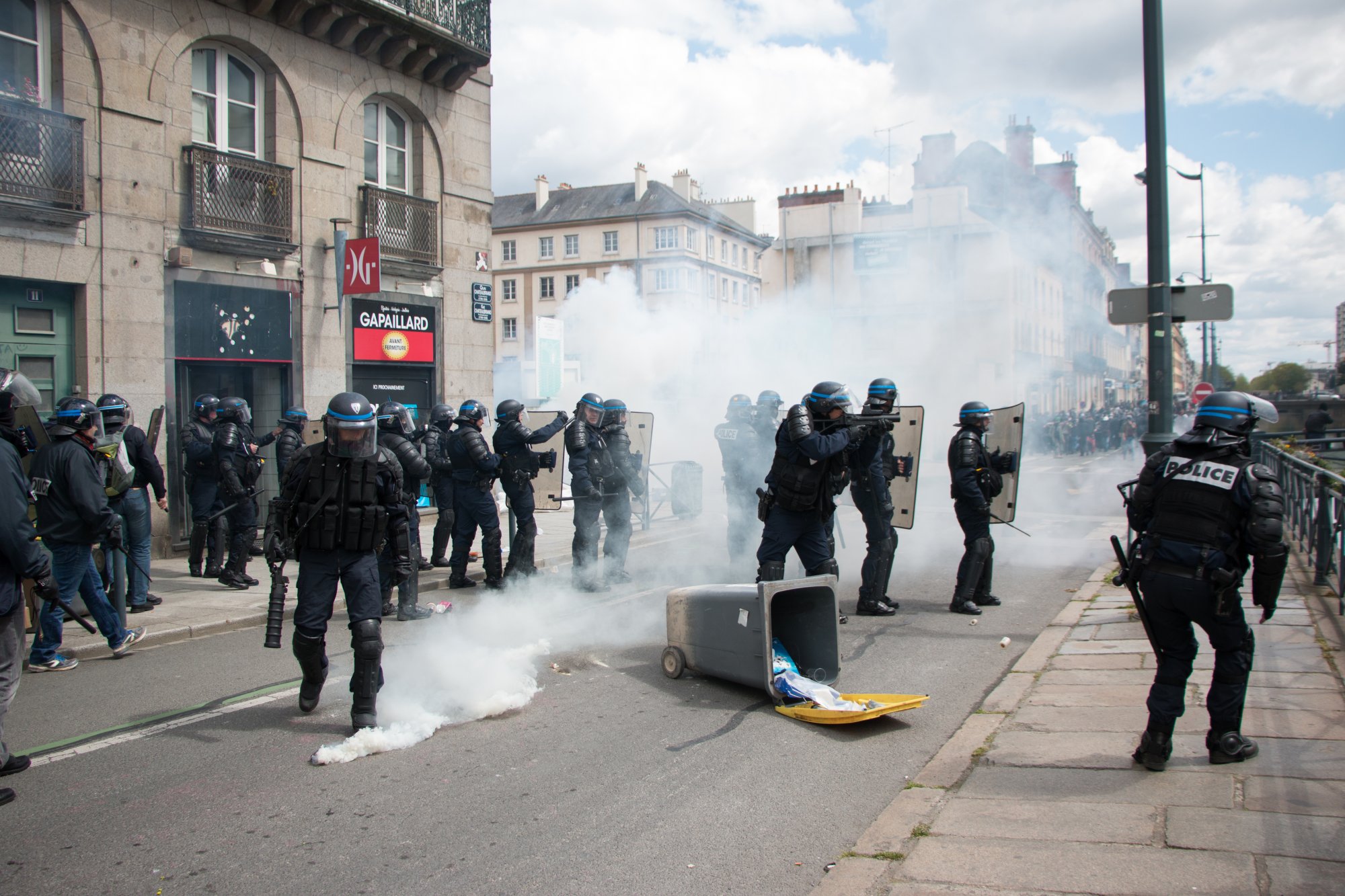
Photograph of the officer at the moment of the LBD shot that struck Jean-François Martin, superimposed with the 3D reconstruction of his position at that instant in the 3D model.
- Incident date
- Location
- Rennes (France)
- Victim(s)
- Jean-François Martin (20 y.o.)
- Consequence(s)
- Éborgnement
- Force(s) involved
- Police nationale
- Methods employed
- Lanceur de Balle de Défense (LBD)
- Theme(s)
- Methodology
On 28 April 2016, in the early afternoon, several thousand protesters marched against the Labour Law (Loi Travail) through the centre of Rennes. Near the banks of the Vilaine river, tensions flared between protesters and police. The officers used tear gas and fired several shots from LBD 40 launchers (lanceur de balles de défense, a police weapon firing 40 mm rubber projectiles). At 1:09 pm, one of these shots crossed the river and struck a man in the face. Jean-François Martin, a 20-year-old student, collapsed on the roadway. The injury would result in the permanent loss of his left eye.
The inquiry opened following the victim’s complaint established that only two of the police officers present at the scene at the time of the events were carrying LBDs. But nothing in that inquiry specifies which of the two officers was responsible for the shot that caused the injury. Four years after the events, on 29 May 2020, the investigating judge in charge of the case dismissed it (non-lieu), on the grounds that the inquiry had “not made it possible to identify the perpetrators of the LBD shot that struck Jean-François Martin”. He immediately appealed the decision.
In April 2021, as part of these appeal proceedings, Jean-François Martin’s lawyer, Arié Alimi, contacted Index to work on a counter-investigation. Based on the many photos and videos taken at the time of the events, the aim was to examine the LBD shots identifiable in the images and, as far as possible, to determine which of the two officers carrying LBDs had caused the loss of Jean-François Martin’s eye.
3D reconstruction of the shot trajectories
To carry out this work, we first conducted extensive online research (OSINT) in order to enrich the visual documentation available in the case file. At the end of this research, the full set of images at our disposal for this counter-investigation comprised seven videos filmed by witnesses, some twenty photographs taken by journalists, and stills extracted from surveillance footage filmed from a National Gendarmerie helicopter.
We synchronised these images, using the timestamp displayed on the helicopter’s surveillance footage as the reference time. Based on this synchronisation, a detailed analysis of the images captured around 1:09 pm – the time of Jean-François Martin’s injury – enabled us to identify five LBD shots compatible with the victim’s injury.

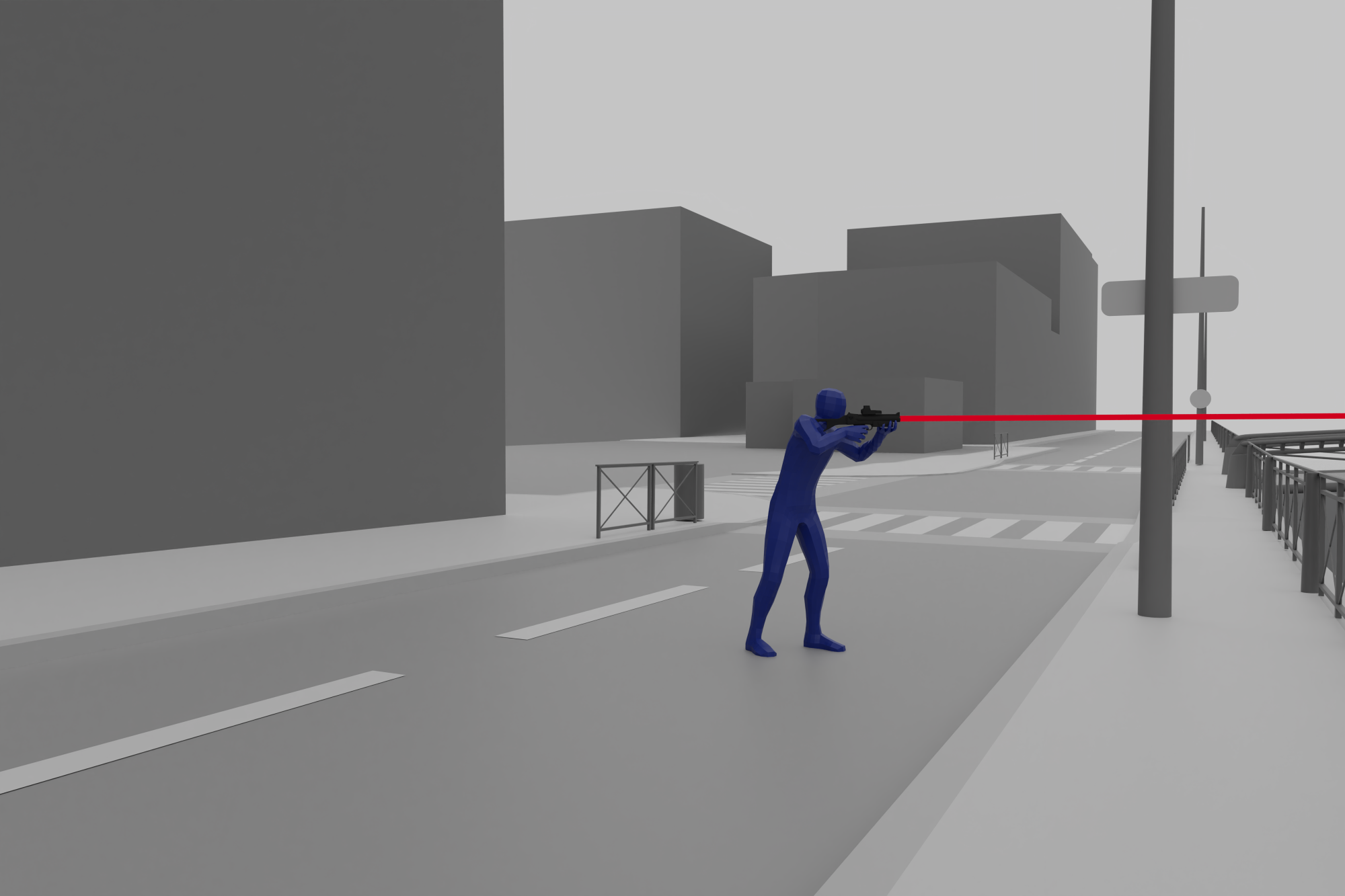
For each of these shots, using the available images, we reconstructed the precise position of the shooter and of the muzzle of his weapon in a 3D model of the scene of the incident, in order to model the trajectory of each shot in space.
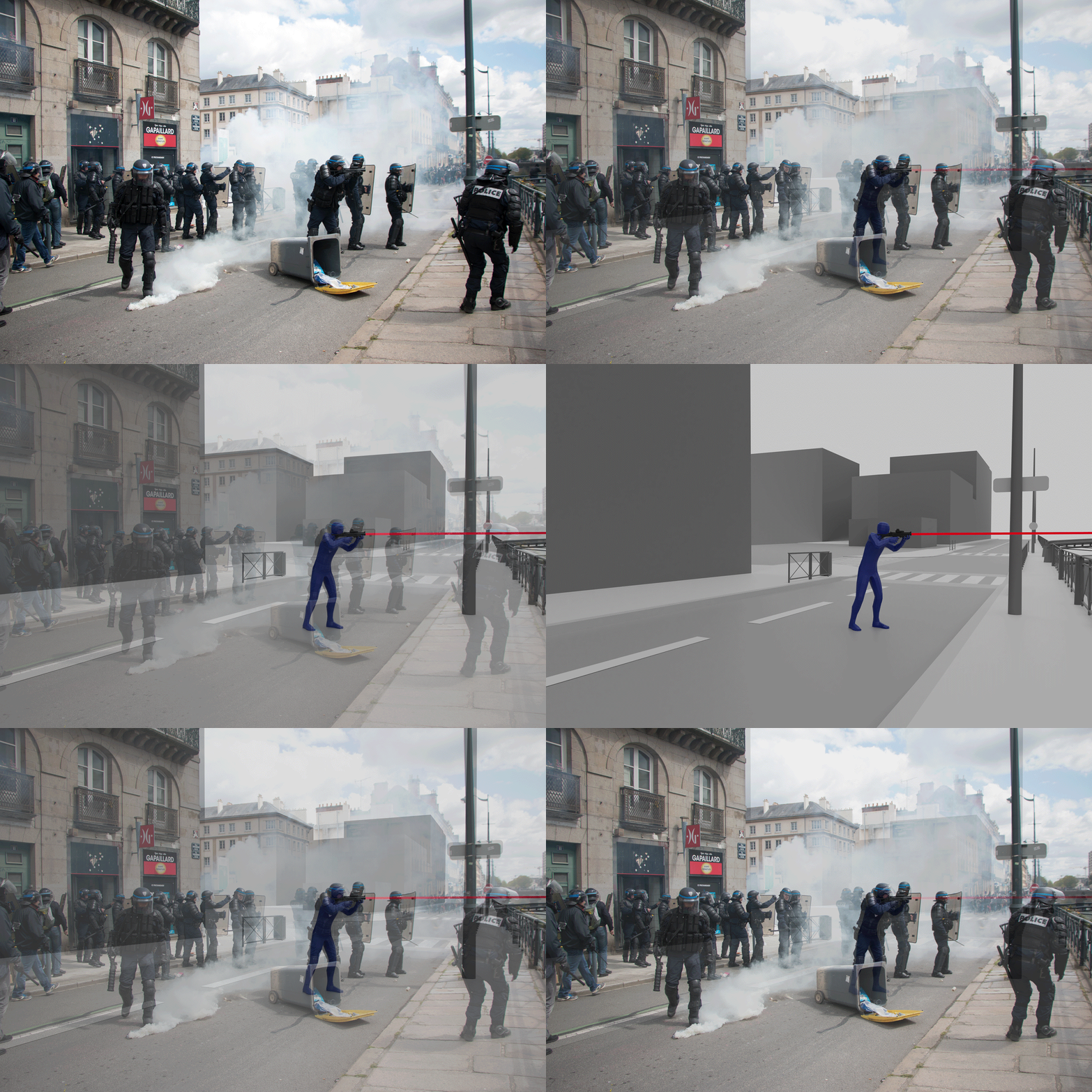
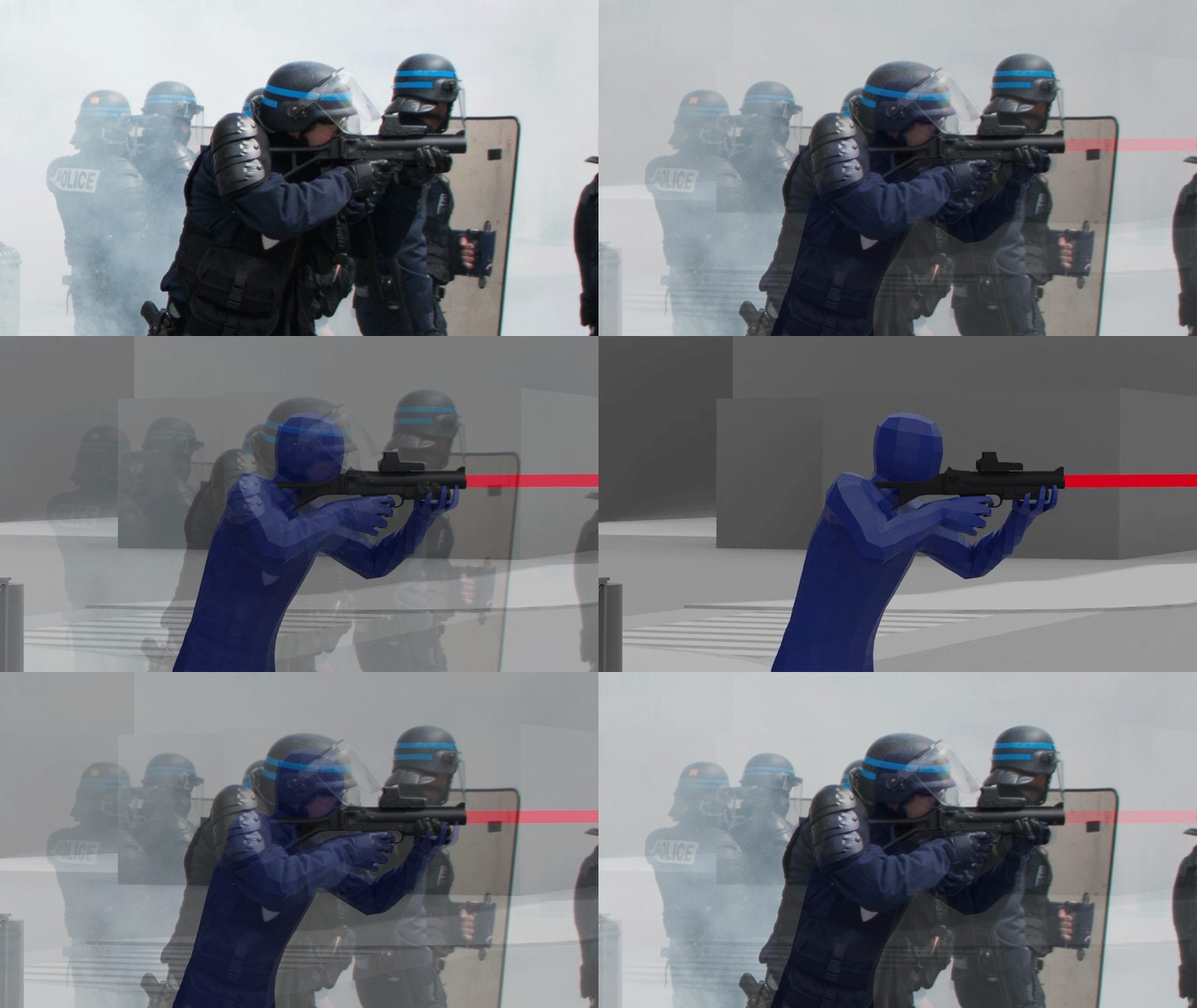
This work enabled us to locate the five LBD shots within the 3D model of the scene. Examining them one by one in this way, we found that only one of these shots crossed the area where Jean-François Martin was standing at the moment he was injured, while another passed close to that same area. Both of these shots were fired by the same police officer, Anthony P. As for the second officer carrying an LBD, Nicolas P., the three shots he fired were directed towards the middle of the footbridge, far from the area where Jean-François Martin was standing.
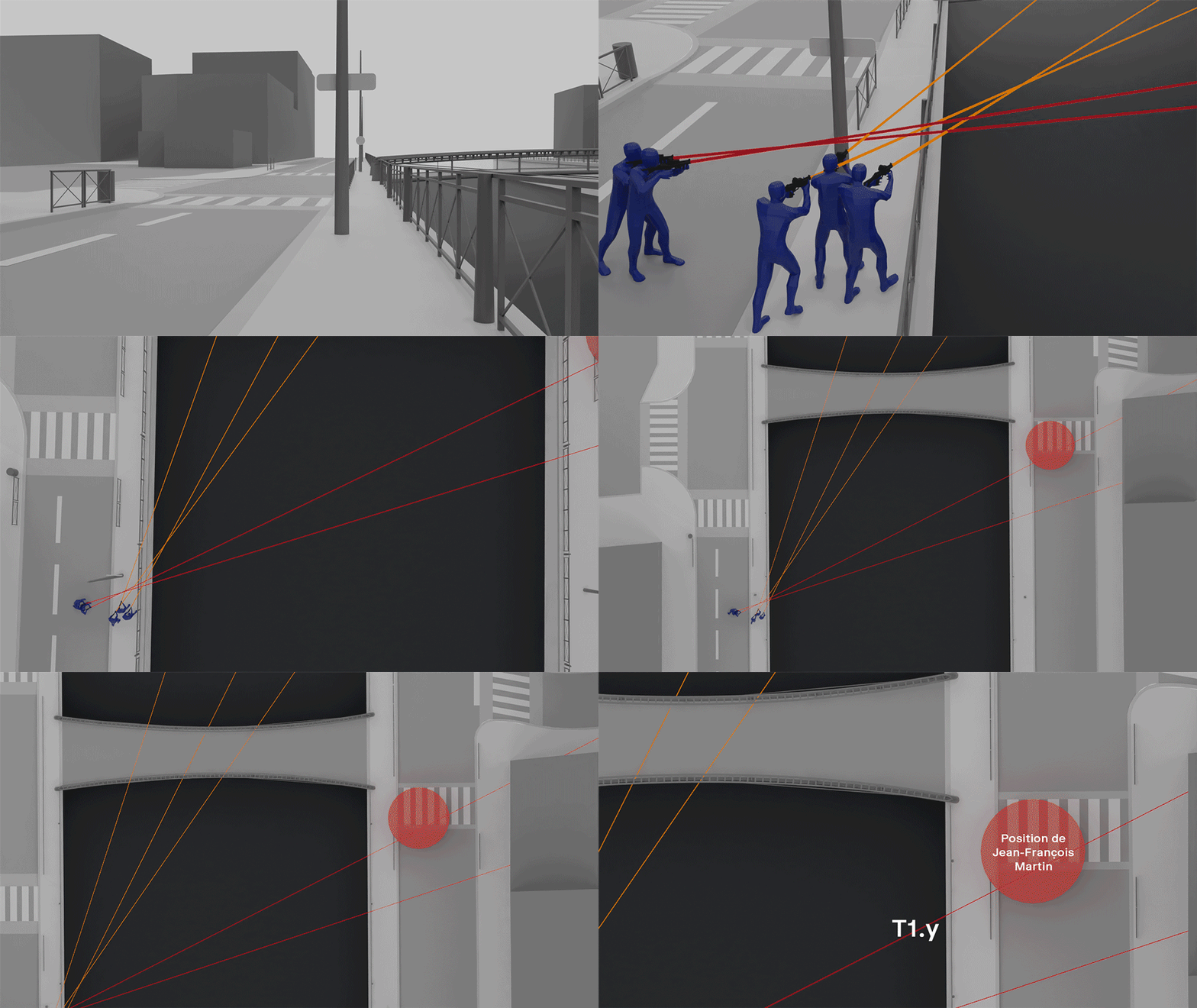
On 31 August 2021, Index submitted its expert report to Arié Alimi’s law firm. In the conclusion of the document, which details each step of our analysis, we stated:
“[I]t is highly probable that police officer Antony P. is the perpetrator of the LBD shot that caused Mr Martin’s injury.”
A short-lived judicial “victory”
Jean-François Martin’s appeal hearing before the investigating chamber of the Rennes Court of Appeal took place in September 2021. In addition to having submitted it in the proceedings, Arié Alimi recalls having “argued at length on the elements provided by Index’s report”, which were the only new elements in the case file since the dismissal pronounced at first instance.
In November 2021 – a rare occurrence in a police violence case – the investigating chamber of the Rennes Court of Appeal overturned the first-instance dismissal and sent police officer Anthony P. for trial before the criminal court (tribunal correctionnel) – the very officer identified in our expert report as the highly probable perpetrator of the LBD shot that cost Jean-François Martin his eye. At the time, the complainant reacted to the decision by saying that it had “the smell of victory”.
However, the implicated officer swiftly appealed this decision before the Court of Cassation (France’s highest court). A few months later, the ruling of the Rennes Court of Appeal was quashed on a procedural defect, as the officer had not been placed under formal investigation (mise en examen, the French equivalent of being charged) before being sent for trial before the criminal court. Six years after the events, the case was then transferred to another Court of Appeal.
“We were sent back before the investigating chamber of Angers, and there everything was re-examined – unfortunately in the wrong direction,” says Arié Alimi. On 22 February 2023, the Angers Court of Appeal upheld the dismissal order pronounced at first instance. In the ruling setting out the grounds for its decision, the chamber considered that the use of the LBD by officers of the Rennes police Intervention Section, at the same time as flares were being fired and landing near their position, constituted “a proportionate use of force”.
The decision is surprising. In his statements to the IGPN (the National Police’s internal oversight body), police officer Anthony P. confirms having fired his LBD towards the opposite quay, located more than 40 m away – whereas the electronic sight fitted to his LBD is normally set for a distance of 25 m. Furthermore, his statements show that he was not aiming at a particular individual, but fired towards a group: “I fired at people who were throwing projectiles. I cannot describe them to you, they were all dressed the same, dressed in black, hoods, etc. I cannot tell you whether I hit my targets at that moment,” one reads in the transcripts of his questioning by investigators, which we were able to consult. These elements clearly contravene the rules governing the use of the LBD 40, a weapon that may only be used in a targeted manner, against “a violent and/or dangerous person”. In other words, the dismissal order pronounced by the Angers Court of Appeal exempts from criminal liability a police officer whose non-regulatory use of his LBD very probably resulted in a mutilation.
This decision should also be placed in the perspective of the judicial history of the Jean-François Martin case as a whole. Following the victim’s complaint, the first court decision took four years to arrive, and resulted in a dismissal, on the grounds that the officer responsible could not be identified. Had that been the final outcome of the case, it would have resembled many other police violence cases. Yet in this particular case, the independent counter-investigation carried out by Index – an organisation rooted in civil society – made it possible, in just three months, to identify the officer responsible and thus to remove the obstacle that had justified the courts’ refusal to bring charges. The judicial process then resumed. After two further years of proceedings, the courts ultimately reaffirmed that there were no grounds for prosecution, this time changing the reason. It was no longer a matter of the impossibility of identifying the officer responsible (on this point, the decision of the Angers Court of Appeal does not call Index’s expert report into question); this time, the court explains its decision to close the case on the grounds that it considers the “use” of the LBD by the implicated officers to have been legitimate, in view of the hostility the officers were allegedly facing at the time of the events. The reasoning changed along the way, but the court’s decision remained the same: not to prosecute the police officer.
At least 55 people have lost an eye to LBD shots since 2005
Since Jean-François Martin’s case, the number of people who have lost an eye to an LBD shot during a protest has soared.
According to the unified count compiled by the website violencespolicieres.fr, 29 people are reported to have lost an eye after being struck in the face by an LBD shot since November 2018, most of them during the repression of the Yellow Vests movement.
The 2016 mobilisation against the Labour Law marked a turning point in the use of the LBD, which then went from the exception to the rule in public order policing operations. Before that, the use of this weapon had long been largely confined to working-class neighbourhoods. Widely distributed within the BAC units (Brigades anti-criminalité, plainclothes anti-crime units) by Interior Minister Nicolas Sarkozy from 2002 onwards, the rubber-bullet launcher – also known as the Flash-Ball, after one of the first models – had by 2016 become “emblematic of the way policing is done in the suburbs”, according to sociologist Fabien Jobard.
Cases of serious injuries caused by an LBD in working-class neighbourhoods are numerous. According to a report by the NGO ACAT, between 2005 and March 2016, rubber-bullet launchers were responsible for at least 39 serious injuries, “most of them to the face”, the report states, recording 21 people “who lost an eye or the use of an eye”, as well as one “man hit in the chest by a shot at close range [who] died in December 2010”. The collective Désarmons-les, whose regular count of people maimed by law enforcement goes back to 2005, has recorded 24 people who lost an eye to an LBD shot between 2005 and 2014. After 2016, when it joined the ranks of weapons frequently used in public order policing, the LBD nonetheless continued to be used in the suburbs. The case of Adnane Nassih, who lost an eye to an LBD shot fired by a BAC officer in Brunoy (Essonne) in 2020, was the subject of a video investigation by Index, in partnership with Libération.

In the absence of precise, publicly available official data, the most complete data on injuries resulting from the use of weapons by the French police come from the various counting initiatives run by civil society.
When the data from these counts are cross-referenced, it appears that between 2005 and 2023, at least 55 people lost an eye to an LBD shot.